2026-09-03
Don’t Let Your Factory Website Become a Ghost Town: Managed vs. DIY
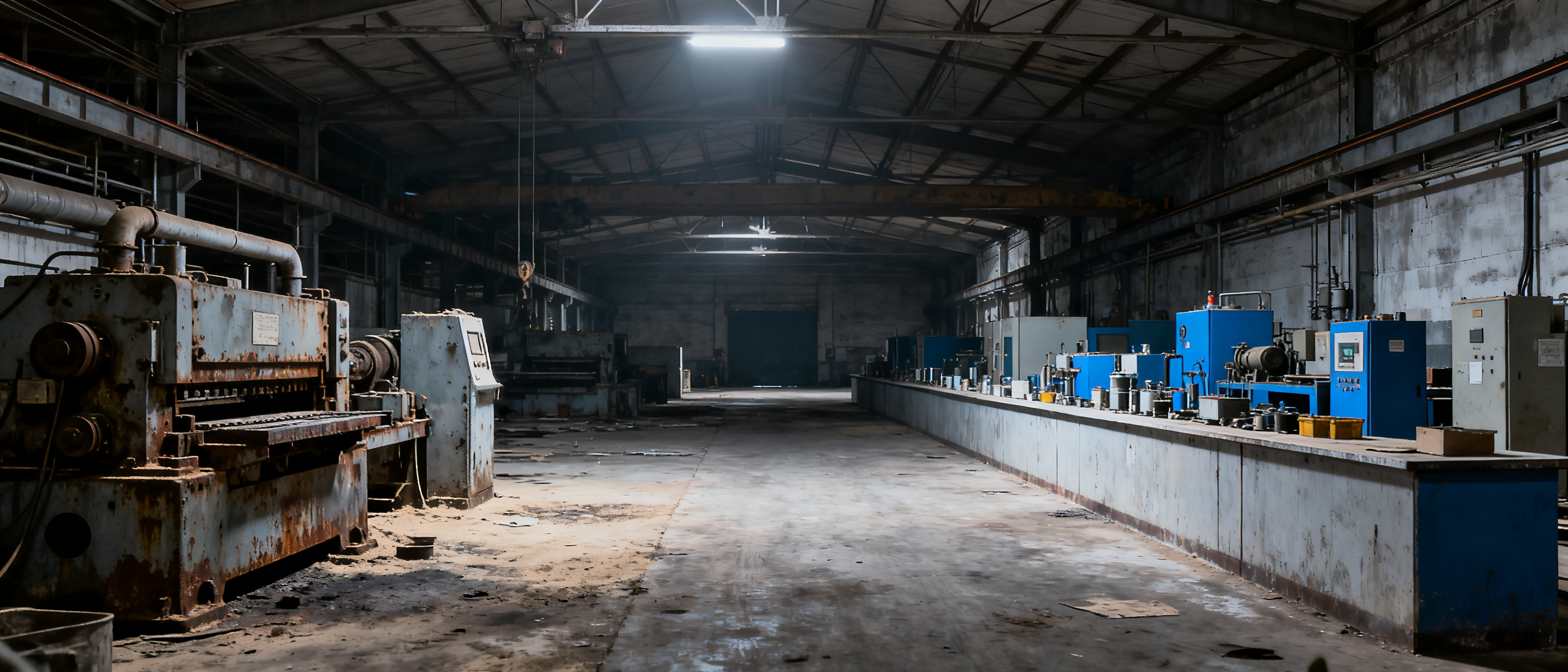
A factory website turns into a ghost town the moment an overseas buyer lands on a "Latest News" page from 2019, spots a product line that hasn't been updated since the last trade show, or finds a contact form that no one replies to. Don't let your website become a ghost town — the root cause is almost never that the manufacturer stopped caring. It's that the ongoing maintenance burden of a DIY builder or agency handover quietly outpaces what an export desk can realistically sustain. The fix isn't more effort from the factory owner. It's a different model for keeping the site alive.
Why factory websites become ghost towns
Most B2B factory sites start with good intentions. A team spends weeks picking a template, writing company copy, uploading product photos, and maybe even publishing a handful of blog posts. Then the real work of running a factory — production schedules, quality inspections, shipment logistics, trade show preparation — takes over. The site sits untouched for months, then years. Don't let your website become a ghost town simply because the person who built it moved to a different role or the agency retainer ran out.
Three patterns repeat across export factories and small OEM manufacturers:
- No designated owner. The site was built by a nephew who studied abroad, a summer intern, or an agency on a one-time project. When that person leaves, the login credentials leave with them.
- Fear of breaking something. A factory manager who can calibrate a CNC machine in minutes will freeze in front of a WordPress dashboard. The risk of taking the site offline feels higher than the risk of leaving it stale.
- No content pipeline. Even when someone has access, there's no system for turning a new certification, machine installation, or completed order into a site update. The gap between "something happened" and "something appeared on the website" is infinite.
The result is a credibility gap. Buyers scanning supplier sites in under ten seconds notice the date stamps, the broken images, and the silence. A ghost-town site doesn't just look neglected — it reads as a signal that the business itself might be unreliable.
The maintenance trap: DIY builders and agency handovers
When a factory chooses a DIY builder like Wix, Squarespace, or a self-hosted WordPress install, the upfront promise is control. You can drag-and-drop, change colors, and add pages without calling a developer. That freedom is genuine — and it's exactly what makes the model overkill for a thin export frontage. A factory doesn't need design freedom. It needs a fixed, credible structure that stays current without anyone logging in to adjust padding or update plugins.
Agency handovers solve the design problem but create a different maintenance trap. The site launches beautifully, but every subsequent change — a new product line, an updated ISO certificate, a team photo swap — requires a ticket, a quote, and a turnaround time measured in days or weeks. Most export desks simply stop requesting updates. The site fossilizes at the point of handover.
Here's how the three common approaches compare for a typical small-manufacturer B2B showcase:
| Approach | Upfront cost | Ongoing maintenance burden | Best for |
|---|---|---|---|
| DIY builder (Wix, WordPress) | $0–$30/mo | High — you handle updates, security, backups, design | Teams with dedicated design time and a CMS need |
| Agency custom build | $3,000–$15,000+ | Medium — you call and pay for every change | Complex portals, enterprise CMS, multi-language workflows |
| Managed frontage | ~$59/yr | None — platform handles upkeep, updates, and structure | Thin export showcase, OEM credibility page, digital card + brochure |
None of these approaches is objectively bad. A Wix site is excellent for a small business that wants to experiment with layout and publish regularly. A custom agency build is the right call when you need a multilingual enterprise portal with ERP integration. The problem specific to export factories is that neither model matches the actual requirement: a simple, always-updated English frontage that exists so buyers trust you enough to inquire — without anyone on your team becoming a part-time webmaster.
How a managed frontage keeps your B2B showcase alive without a web team
The managed approach flips the maintenance question. Instead of asking "who will update the site?" it asks "why should the factory need to update the site at all?" A managed frontage takes the business facts a manufacturer already knows — company profile, core solutions, certifications, production lines, key equipment — and builds a structured B2B showcase from that data. When something changes, you update the fact once, and the site, digital card, brochure, and share links all refresh together.
This is the philosophy behind B2B Frontage, an opinionated managed service built specifically for export factories and small OEM manufacturers who need an English presence without a website team. At $59 per year, it covers the showcase site, a digital business card, a downloadable brochure, and short links for sharing — all maintained on the platform so the factory owner never touches a builder, runs an update, or worries about a plugin breaking overnight. It's not a replacement for a full CMS when you genuinely need one. It's a deliberate alternative to the DIY blank canvas for the narrow use case where a factory just needs to look credible and stay current.
The key shift is from "site as IT project" to "site as automatically-maintained business asset." Google's guidance on creating helpful, people-first content emphasizes that search engines reward sites that demonstrate freshness and reliability over time. A managed frontage that stays up-to-date without manual intervention aligns with that standard far better than a beautifully designed page that last saw an update during the previous administration.
What an active, up-to-date site looks like to an overseas buyer
Buyers scanning supplier sites aren't grading design originality. They're looking for trust signals that take less than ten seconds to verify:
- Recent activity. A copyright year in the footer that matches the current year. A "Last updated" or certification date that isn't years old. These are the first things a procurement manager checks.
- Consistent contact information. The same phone number, email, and address across the website, the marketplace listing, and the Google Business Profile. Mismatches trigger spam filters in the buyer's brain.
- Working product pages. Images that load, specs that are readable, and — crucially — a clear path to inquire. A site doesn't need fifty products. Three to five well-presented core solutions beat fifty broken gallery pages.
- Proof of operation. A team photo, a shot of the production floor, a mention of a recent trade show. These signals say "we are a real factory, operating now."
A site that checks these four boxes doesn't need to be large. A lean, five-page showcase — home, about, solutions, certifications, contact — that is demonstrably alive will outperform a sprawling forty-page site that went silent in 2020. The web.dev research on site performance confirms that visitors form opinions about credibility in milliseconds, and those judgments are driven more by perceived freshness and load speed than by visual complexity. For an export factory, a fast, simple, obviously-current page is the highest-ROI configuration.
Buyers are also cross-referencing. A procurement manager who finds your factory on Made-in-China, IndiaMART, or Thomasnet will open your own-domain site in a second tab. If the marketplace listing is current but the website is a ghost town, the inconsistency erodes trust. If both are fresh and aligned, the buyer moves to inquiry with confidence. That's the complementary role of an own-domain frontage — it doesn't replace the marketplace, it closes the trust gap the marketplace alone can't fill.
FAQ
How often should I update my factory website?
At minimum, review your site quarterly. Update the copyright year, verify that all contact details are correct, and check that your core product or solution descriptions still match what you actually offer. If you've added a new certification, machine, or production line, add it within a month. The goal isn't a newsroom cadence — it's making sure a buyer who lands on your site today sees evidence that the business is operating now, not three years ago.
Can't I just use a marketplace listing instead of maintaining my own site?
Marketplace listings are essential for discovery — platforms like Alibaba, Global Sources, and Europages put your factory in front of buyers actively searching. But when a buyer is ready to verify your legitimacy, they look for an independent, own-domain web presence. A marketplace profile says "I'm listed here." A current, own-domain site says "I'm a real business you can trust." The two work together; neither fully replaces the other.
What's the minimum content a B2B site needs to not look abandoned?
A credible B2B factory showcase needs at least five core pages: a clear home page stating what you manufacture, an about page with company facts and team proof, a solutions or products page with real photos and specs, a certifications or quality page, and a working contact page with multiple inquiry paths. Beyond content, the site must show signs of life — a current copyright year, no broken images, and response when someone submits the contact form. Pages that exist but aren't maintained are worse than fewer pages that are demonstrably current.
How much does website maintenance actually cost for a small factory?
It depends on the model. A DIY WordPress site might cost $10–$30/month in hosting and plugins, but the real cost is the time of the person who maintains it — easily several hours per month if you're updating plugins, fixing broken layouts, and adding content. An agency retainer for periodic updates typically runs $200–$500/month. A managed frontage service like B2B Frontage costs $59/year and eliminates the hands-on maintenance variable entirely by keeping the site structure and updates on the platform side. For a factory that simply needs a credible, always-current English showcase, the managed option removes both the financial and the time cost of ongoing maintenance.
References & Further Reading
- Google Search Central — Creating Helpful, Reliable, People-First Content
- web.dev — Why Does Speed Matter?
- B2B Frontage Blog — Articles on B2B Export Presence & Factory Websites
- Google Search Central — Site Names and Branding in Search Results
- Next.js — Static Site Generation for Fast, Low-Maintenance Pages