2026-08-10
OEM English Showcase vs Custom CMS: Time, Cost & Trust
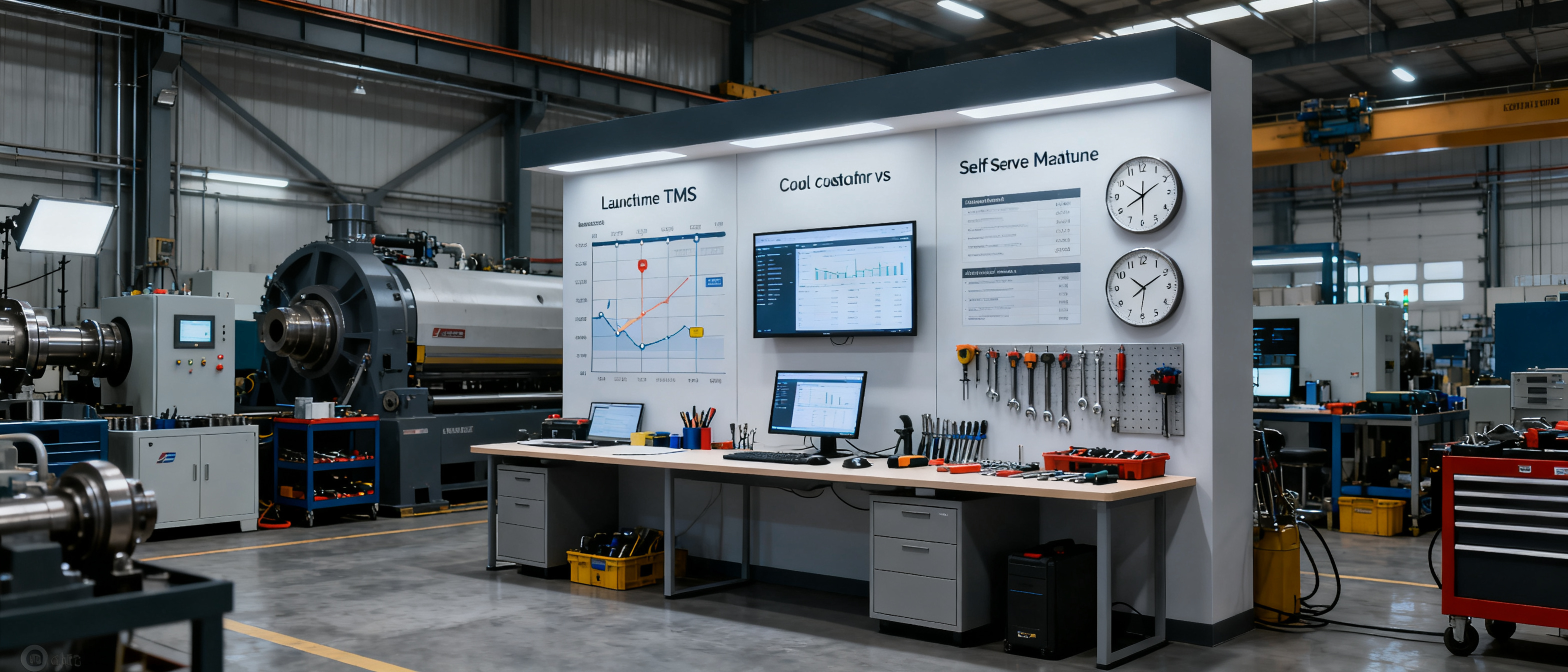
What a self-serve factory website actually delivers for $59/year
A self-serve factory website strips away everything a small manufacturer does not need and keeps what a buyer checks in a 10-second scan. The B2B Frontage Auto plan at $59/year delivers a thin English showcase with four components: a composed factory page, a digital business card, a downloadable brochure slot, and short links you can send in an email or WhatsApp message. A subdomain is included. If you need a custom domain, you can bind one at checkout for a $5 assist fee, or register and bind a new domain for $15.
The page loads fast because it carries no heavy CMS framework, no plugin stack, and no database queries on the front end. That matters for the buyer who opens a supplier link on a phone in a sourcing office or on a trade-show floor. The showcase is inquiry-ready out of the box: a contact path sits visible without scrolling, and the layout is composed enough that a buyer sees capability, product scope, and a way to reach you in one glance. You can see the structure in action at the demo hub, and an industry-specific example at the PCBA factory demo.
This is not a WordPress site, not an Alibaba storefront, and not a multi-page enterprise portal. It does one job: give an overseas buyer enough signal in 10 seconds to decide whether to send an inquiry. For $59/year, the boundaries are honest — no built-in ranking guarantees, no inquiry promises, no inflated customer counts. You can read the full list of what the platform will and will not claim at the rules page.
What a custom CMS would cost a small manufacturer in time and maintenance
The self serve factory website vs custom cms comparison becomes stark when you measure maintenance burden in hours per month. A custom WordPress site, a Drupal build, or a bespoke Laravel factory portal typically takes 4 to 12 weeks from brief to launch. Upfront costs range from $3,000 for a templated WordPress install with a freelancer to $15,000 or more for a custom-designed build with product-catalogue functionality. Then the ongoing costs begin.
Hosting for a CMS-driven site with acceptable load times for overseas buyers runs $150–$600 per year. Plugin licences, security patches, SSL certificate renewals, and database cleanups add another $200–$1,000 annually if you handle them yourself, or $1,500–$3,000 if you pay a developer on retainer. A single plugin conflict after an auto-update can take a site offline for days if no one is watching. For an export desk where the website is a trust signal rather than a revenue engine, that maintenance burden is disproportionate to the value the site generates.
The table below compares the two paths on the metrics that matter to a small manufacturer:
| Aspect | Self-Serve Thin Showcase (B2B Frontage Auto) | Custom CMS (WordPress / Drupal / Bespoke) |
|---|---|---|
| Launch time | Under 10 minutes | 4–12 weeks |
| Annual cost | $59/year | $300–$3,000+/year (hosting, plugins, maintenance) |
| Upfront cost | $0 | $3,000–$15,000+ |
| Maintenance | Automatic — managed platform | Manual — plugin updates, security patches, SSL renewals |
| Buyer-facing load time | Under 1.5 seconds | Often 3–8 seconds (heavy themes, unoptimised plugins) |
| Inquiry path visibility | Single-click, always above the fold | Can be buried in navigation menus or contact forms |
For an SME manufacturer or export desk, the custom CMS path often means paying for capacity you will never use — blog modules, multi-author workflows, e-commerce plugins, and layered caching setups — while the one thing a buyer needs (a fast, clear, inquiry-ready page) gets buried under the weight of the system.
When a custom CMS becomes the honest path (and why starting self-serve is safer)
A custom CMS is not the wrong choice in every case. If you run a manufacturer with 500 SKUs that need individual pages with spec sheets, multilingual routing for five markets, and integration with an internal ERP for live stock data, a thin showcase will not carry that load. B2B Frontage handles the thin English frontage; larger custom factory sites are taken on by quote only, precisely because the requirements are genuinely different. The honest answer to the self serve factory website vs custom cms question is: both have a place, but the order in which you adopt them matters.
Starting with a self-serve thin showcase is safer for three reasons. First, it puts a legitimate English presence online in minutes, which means you can test buyer response before committing five figures to a custom build. Second, it gives you a live reference point — once you see what buyers actually click and ask about, you can scope a custom CMS against real behaviour rather than assumptions. Third, a thin showcase that loads fast and stays online builds a track record with Google while you plan a larger site; a custom CMS that sits in development for three months builds nothing. As web.dev notes, page speed and stability are direct ranking signals, and a lightweight page scores well on Core Web Vitals from day one without optimisation work.
If you later outgrow the thin showcase, you have a validated foundation and a clear brief. The self-serve site can remain as a fast-loading front door while a custom CMS handles deeper product data behind it. Starting small does not limit you — it gives you data.
Why the thin showcase wins buyer trust faster than a custom build
Trust for an overseas buyer is not built through design awards or homepage sliders. It is built in the first 10 seconds through three signals: speed (does the page load immediately or does the buyer stare at a spinner?), composure (does the page look deliberate and maintained, or cobbled together?), and clarity (can the buyer find a contact path without hunting?).
A thin showcase wins on all three. It loads in under 1.5 seconds because there is no CMS framework to wake up, no database to query on each request, and no plugin chain to parse. A custom CMS, even a well-built one, rarely loads in under 3 seconds without aggressive caching and a CDN — and many small manufacturers do not have the technical support to configure those layers correctly. A broken image, an expired SSL certificate, or a "plugin update required" banner on a WordPress site signals neglect to a buyer who has 20 other supplier tabs open. The thin showcase, by being simpler, has fewer failure points and stays composed longer without attention.
The inquiry path is the decisive factor. On a custom CMS, the contact page might be nested under "About Us" or hidden behind a form with six required fields. On a thin showcase, the inquiry button sits above the fold on the same page the buyer landed on. That single-click path is what converts a 10-second scan into a message. Buyers do not reward complexity; they reward clarity. A factory that can present itself cleanly in one page signals that it understands what a busy sourcing manager actually needs.
FAQ
What exactly is included in the $59/year Auto plan?
The Auto plan at $59/year includes a thin English factory showcase with a composed page, a digital business card, a downloadable brochure slot, and short-link generation. A subdomain is included. Custom domain binding is available at checkout for a $5 assist fee, or you can register and bind a new domain for $15. The plan renews annually at the same rate. There are no upsells, no add-on fees for core features, and no inquiry or ranking guarantees — the boundaries are published at the rules page.
Can I use my own domain name with a self-serve factory website?
Yes. During checkout you can bind an existing domain you own for a $5 assist fee, or register a new domain and have it bound for $15 total. The domain points to your thin showcase, and the subdomain option remains available if you prefer to start without a custom domain.
How does a thin showcase compare to an Alibaba storefront?
An Alibaba storefront sits inside a marketplace where your listing competes directly with dozens of other suppliers on the same page, and the buyer's inquiry path is mediated by the platform. A thin English showcase is your own standalone page — no competitor listings next to yours, no platform branding, and a direct inquiry path that goes to your email or messaging channel. Many export desks use both: Alibaba for discovery, and a self-serve showcase as the clean, fast-loading destination they link to in emails, signatures, and trade-show follow-ups.
Do I need a custom CMS if I have hundreds of products?
Not necessarily at the start. A thin showcase can present your product scope and capability at a high level, with a brochure download for spec sheets or a catalogue PDF. If buyers consistently request individual product pages with detailed specs, that is a signal to plan a custom CMS build — but you will have real buyer behaviour to guide the scope. Starting with a thin showcase means you do not build a 500-product catalogue before knowing whether buyers will browse it.
Will a self-serve site hurt my Google ranking compared to a custom CMS?
No. Google's ranking factors include page speed, mobile usability, and Core Web Vitals — all areas where a lightweight thin showcase performs well out of the box. A custom CMS can rank well too, but only if it is properly optimised, cached, and maintained. A heavy CMS with slow load times and broken pages will rank worse than a fast, stable thin page. The platform does not guarantee rankings, but the technical foundation is sound. For more on speed as a ranking signal, see web.dev's guidance on Core Web Vitals.
References & Further Reading
- B2B Frontage — Demo Hub — See the thin showcase structure live
- PCBA Factory Demo — Industry-specific example of a composed factory frontage
- B2B Frontage — Honest Boundaries — What the platform will and will not promise
- B2B Frontage Blog — More articles on factory frontages, buyer trust, and lean web presence
- web.dev — Core Web Vitals — Google's guidance on page speed, stability, and user experience as ranking signals
- Next.js — Static Generation — Technical background on how static pages achieve fast load times without a traditional CMS