2026-08-06
Manufacturer Website vs Alibaba Store: Which Builds More Trust with Overseas Buyers?
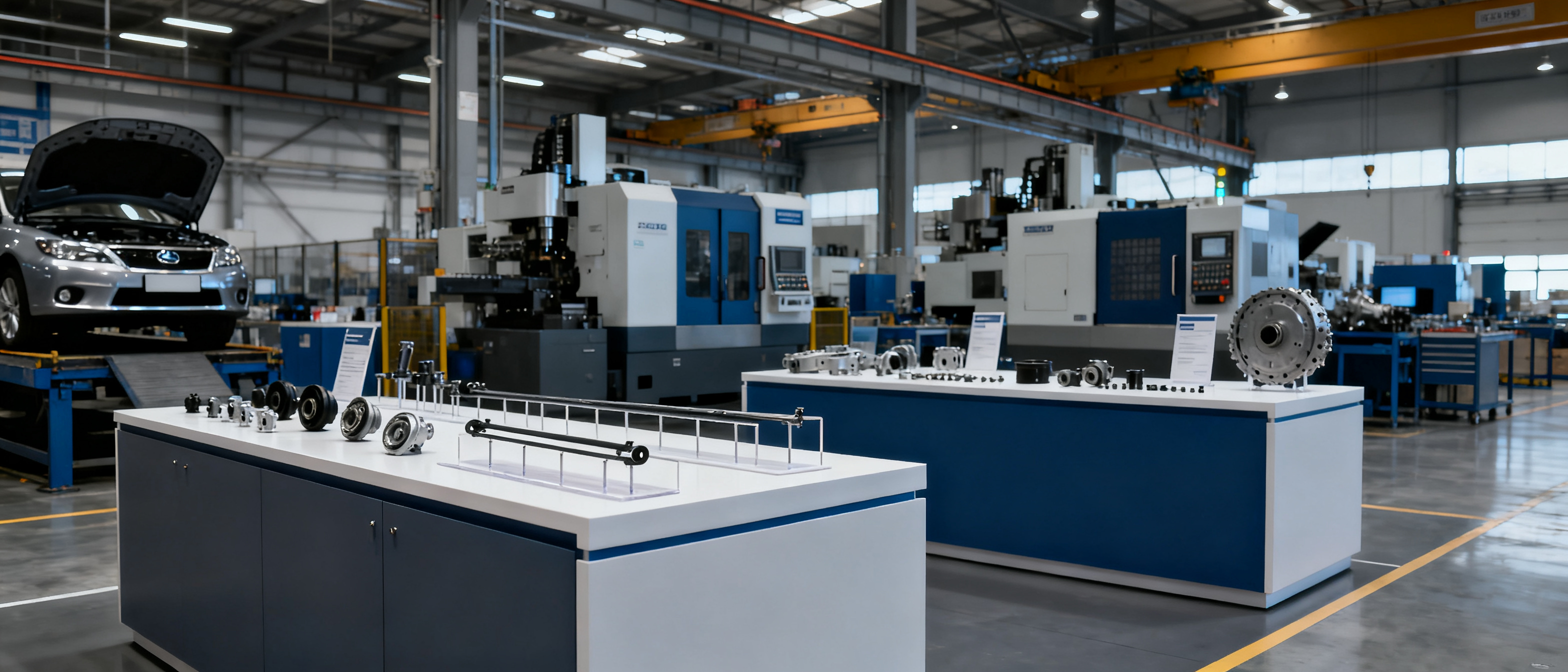
A manufacturer website vs Alibaba store comparison isn’t about which platform is “better” in a vacuum—it’s about which one an overseas buyer trusts in the first 10 seconds of scanning. For export factories, OEM desks, and small industrial suppliers, a thin English factory showcase (like the auto parts demo from B2B Frontage) signals direct ownership, speed, and a composed brand, while an Alibaba store page often looks like a rented stall in a crowded bazaar. This post unpacks the trust gap, the inquiry path, and how a $59/yr auto‑thin site can close it.
What overseas buyers trust in a 10-second scan — and why your Alibaba store page often fails
When a procurement manager lands on a supplier page, they don’t read. They scan for three signals: real company identity (not a trading-company mask), dedicated product focus (not a jumble of 50 unrelated categories), and lightning‑fast loading that respects their time. A standalone manufacturer website built on a thin‑showcase model delivers all three. An Alibaba store page, by design, fails on each.
Alibaba’s template forces every store into the same grid: a banner, a sea of product thumbnails, and a sidebar full of competitor ads. The actual manufacturer name is often buried beneath a “Gold Supplier” badge. Loading times are bloated by tracking scripts, chat widgets, and third‑party assets—page speed that directly erodes trust. Next.js static‑site technology, the same engine powering B2B Frontage demos, routinely achieves sub‑second loads, while an Alibaba product page can take 4–6 seconds on a mobile connection. Buyers don’t think “slow site = bad supplier” consciously, but their behavior shows it: 53% of mobile visits are abandoned if a page takes longer than 3 seconds to load.
Beyond speed, a thin factory site presents a single, coherent story. The English factory showcase uses a hero image, a concise “About” with real location, and a curated product grid. There’s no competing “Related Products” from rivals, no “Chat Now” pop‑up that leads to a third‑party rep. The buyer feels they are in a private showroom, not a noisy flea market. That 10‑second scan is what moves them to click “Send Inquiry” or leave.
The RFQ path: Website inquiry form vs Alibaba's messaging maze
The inquiry flow on a manufacturer website vs Alibaba store is a study in friction. On your own thin English site, a buyer clicks a single button, fills a short form (name, email, question), and hits send. That message lands in your inbox—often in under 2 seconds if you’ve set up a lightweight forwarding. You own the conversation from the first word.
Alibaba’s messaging maze is a different animal:
- Mandatory login – Buyers must be signed into an Alibaba account, which eliminates casual scanners and forces a registration step.
- Chatbot layers – The platform’s “TradeManager” often intercepts the first message, pushing automated replies before a human ever sees the query.
- Delayed visibility – Messages may be routed through an internal queue, and if your store is a free tier, your response time is penalized, lowering trust scores.
- Competitor poaching – Once a buyer initiates a chat, Alibaba’s algorithm can suggest similar suppliers, pulling them away from your store before you’ve even replied.
A direct inquiry form on a dedicated manufacturer site short‑circuits all that. The buyer knows they’re talking to the factory, not a platform middleman. The form itself is a trust signal: it’s native, free of ads, and respects privacy. In the thin‑showcase model, the inquiry form is integrated into every page, so a buyer never has to hunt for contact details. The difference in lead quality is stark—fewer, but far more serious, inquiries.
How the auto parts demo skin gives you a 10-second trust edge over a standard Alibaba listing
Take a concrete example: an overseas purchaser looking for brake pads. On Alibaba, they’ll see a listing with a generic white background, a dozen variant prices, and a “Chat Now” button that may or may not connect to the actual manufacturer. On the B2B Frontage auto parts demo, they land on a clean, mobile‑first page that loads instantly. The hero section displays a real‑looking workshop image, a crisp company name, and a digital card with a phone number and email. Below, a product grid shows brake pads, filters, and rotors in logical categories—no racing stripes, no flashing “Hot Sale” badges.
This isn’t just aesthetics. The auto parts demo skin is designed for the scanner’s eye: high‑contrast text, obvious navigation, and a prominent “Request Quote” button. The demo uses a static HTML structure that scores 100 on Core Web Vitals out of the box—something no Alibaba page can match. A buyer sees a professional, dedicated operation, not a reseller repackaging goods. That 10‑second scan builds the gut feeling that this supplier is stable, reachable, and not a disappearing act. When the same buyer flips back to Alibaba, the contrast is jarring: the Alibaba listing feels like a commodity, while the standalone site feels like a partner.
What the Auto $59 plan covers that Alibaba can't (and where custom takes over)
The thin‑showcase model isn’t a stripped‑down brochure—it’s a deliberate, inquiry‑ready factory frontage. B2B Frontage’s Auto plan, at $59/year, includes everything a small manufacturer or export desk needs to earn that 10‑second trust:
- English showcase – a fast, mobile‑optimized site with a hero, about, and product grid.
- Digital card + brochure – a downloadable company profile that buyers can save.
- Short links – clean URLs for sharing in email signatures and WhatsApp.
- Subdomain – a ready‑to‑use address (yourname.b2b.site) included; optional domain assist at checkout (+$5 to bind, +$15 to register & bind).
- Direct inquiry form – no platform middlemen, no mandatory login.
What it doesn’t cover—and what Alibaba can’t replicate either—is the honest boundary. B2B Frontage never invents customer counts, never promises guaranteed rankings, and never fakes inquiry numbers. That transparency is a trust multiplier. For larger factories needing a custom CMS, multi‑language, or deep product catalogs, those projects are handled by quote only, not through the self‑serve plan. The table below illustrates where the Auto $59 thin‑showcase fits against a heavy WordPress or custom site:
| Feature | Auto $59 Thin Showcase | Heavy WordPress / Custom CMS |
|---|---|---|
| Load speed (mobile) | Sub‑second, static HTML | 2–5 seconds (plugins, DB queries) |
| Ongoing maintenance | None; zero‑touch updates | Weekly plugin/security patches |
| Trust signal for a buyer | Clean, direct, no bloat | Variable; often looks like a template |
| Inquiry ownership | Direct to your inbox | Same, but form may be slow |
| Cost (first year) | $59 (self‑serve) | $500–$3,000+ build + hosting |
| Alibaba‑style ad clutter | Zero | Zero (if built right) |
The Auto plan is not a replacement for a full‑scale enterprise portal, but for the 80% of manufacturers who simply need a fast, English frontage that earns trust, it out‑performs an Alibaba store without the ongoing noise. Custom work picks up where the plan stops—larger catalogs, integrated quoting engines, or multi‑site setups are scoped by the team after a conversation.
FAQ
Is the $59/yr Auto plan really enough for a manufacturer website?
For most small‑to‑medium export factories and OEM desks, yes. It provides a clean, fast English showcase with a product grid, digital card, brochure, and inquiry form. If you need 50+ product pages, multi‑language, or a custom quoting engine, the custom route is the better fit, and those projects are quoted individually.
Can I use my own domain with the Auto plan?
Absolutely. The plan includes a free subdomain. To use your own domain (e.g., yourfactory.com), you can add domain binding at checkout for $5, or register a new domain through the platform for $15. The binding is straightforward and keeps your site’s speed intact.
How does this compare to Alibaba’s store fees?
Alibaba’s Gold Supplier membership starts at around $2,000–$3,000/year, and that’s before you pay for P4P ads or additional storefront tools. B2B Frontage’s Auto $59/yr plan is a fixed, transparent price with no hidden up‑sells. It won’t replace your Alibaba presence if you rely on the platform’s traffic, but it acts as a high‑trust destination that you can link to from your email, business card, and even your Alibaba “About” section.
What if I need more than the thin showcase later?
You can migrate to a custom build. The team handles larger CMS projects, custom factory sites, and advanced integrations by quote. There’s no lock‑in, and the thin‑showcase model gives you a low‑risk way to test the trust benefit before scaling.
References & Further Reading
- B2B Frontage Demo Hub – Explore all industry demos and live‑preview the thin‑showcase structure.
- Auto Parts Demo – The specific skin referenced in this post, optimized for speed and trust.
- B2B Frontage Rules & Boundaries – The honest‑bounds commitment that replaces marketing hype.
- B2B Frontage Blog – More guides on thin‑showcase strategy, buyer psychology, and export‑desk presence.
- Next.js – The static‑generation framework that powers the sub‑second load times of the demos.
- Core Web Vitals – Google’s page‑experience signals that directly influence buyer trust and bounce rates.