2026-08-13
Manufacturer Website First Impression for Exporters: What Buyers Scan
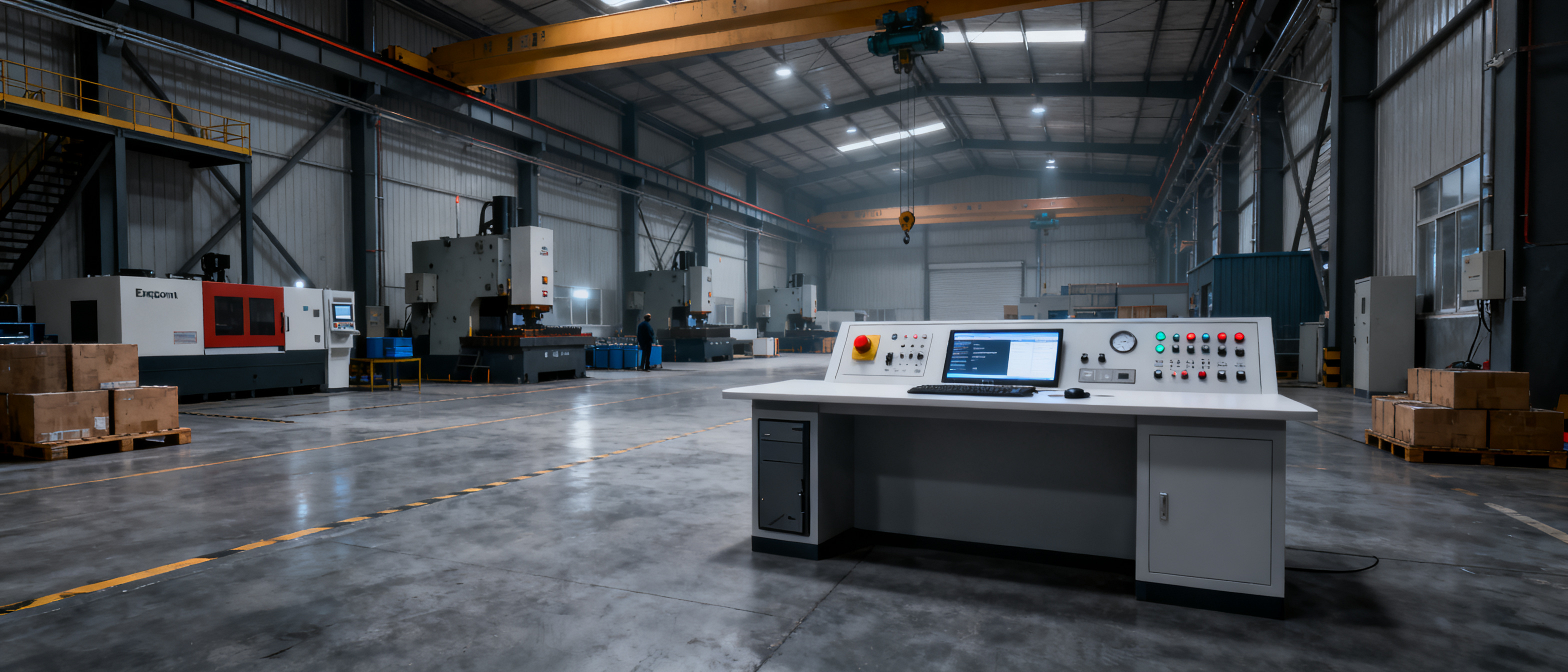
A manufacturer website first impression for exporters is decided in under five seconds. Buyers scan for company legitimacy—a real address, a verifiable business, not just a marketplace storefront—then product category clarity, and a fast, uncluttered path to contact. They are not reading your full story. They are deciding whether to trust you enough to send an inquiry or forward your page to a colleague. If those three signals are missing or buried, the tab closes and the opportunity is gone.
What buyers scan in the first impression of a manufacturer website
When an overseas buyer lands on a manufacturer website, they are not browsing. They are eliminating. Their scan follows a predictable pattern, and exporters who understand it can design a page that survives the cut:
- Company name and location. A real, verifiable entity—not a keyword-stuffed storefront. Buyers look for a physical address and a business name that matches your email domain and invoice header.
- What you actually make. Three to five clear product categories, not a scroll of 400 SKUs. If the buyer cannot place you in a factory type within two seconds, they move on.
- Contact confidence. A direct email, a phone number with country code, and a form that does not require a WeChat account. Buyers want to know they can reach a person, not a platform inbox.
- Page load speed. A manufacturer website that takes over 2.5 seconds to deliver its Largest Contentful Paint (LCP) loses the scan before it begins. Google's Core Web Vitals research confirms that poor LCP correlates directly with higher bounce rates across B2B sites (web.dev).
- No broken English or suspicious claims. One garbled sentence or an impossible certification claim erases credibility faster than no website at all.
The scan is ruthless because the buyer's risk is real. A wrong supplier choice means delayed shipments, quality disputes, and money lost. Your manufacturer website first impression for exporters must answer one unspoken question: "Is this a real factory I can trust, or am I about to waste three weeks?"
Why a marketplace profile fails the first impression test for exporters
Marketplace platforms—Alibaba, Global Sources, Made-in-China—are discovery engines. They help buyers find you. But they fail the first impression test for a simple reason: they are not your page. Every seller profile inside a marketplace looks structurally identical. The buyer cannot tell whether you are a 20-year factory with ISO 9001 or a two-person trading desk that rented a gold-supplier badge. The frame is the platform's, not yours.
Here is how the two compare when a buyer lands for the first time:
| First impression factor | Marketplace profile | Own-domain manufacturer website |
|---|---|---|
| Trust signal | Platform badge (same for all paying members) | Your domain, your address, your story |
| Forwardability | Long URL with tracking parameters; looks like a listing | Clean domain; feels like a company to share with a procurement team |
| Contact control | Platform inbox; buyer must stay logged in | Direct email, phone, form—your channel, your speed |
| First impression control | Template layout you cannot change | You decide what the buyer sees first |
| Buyer scan time to trust | Slower—buyer cross-checks elsewhere | Faster—all signals in one place |
Platforms are essential for discovery. But when a serious buyer shortlists suppliers and opens five tabs, the tab that resolves trust fastest is the one with its own domain, its own layout, and its own uncluttered narrative. The marketplace profile is a shop window in a crowded mall. The own-domain page is your factory gate.
How a thin own-domain page wins the first impression for exporters
A thin own-domain page is not a stripped-down website. It is a deliberate, inquiry-only frontage that gives the buyer exactly what they scan for and nothing they do not need. It loads fast because it is not dragging a CMS, a page builder, or a plugin ecosystem behind it. It answers the three scan questions—who you are, what you make, how to reach you—above the fold.
Exporters who add an own-domain presence alongside their marketplace profiles report a practical shift: the buyer who finds you on Alibaba and then visits your domain converts faster because the second touchpoint confirms the first. The domain page is also forwardable. A procurement manager can paste it into an email or a WhatsApp group without the recipient needing a platform account. That single action—forwarding a clean link—is how small manufacturers enter shortlists they would otherwise miss.
For exporters who want this advantage without hiring a web team, a managed frontage like B2B Frontage turns company facts into a site, a digital card, and a shareable brochure. The knowledge is entered once; the platform handles the technical maintenance. This keeps the first impression clean and consistent across every touchpoint—site, card, PDF—without the ongoing cost of a CMS.
Setting up a manufacturer website that makes a strong first impression—without a website team
Most small and mid-sized manufacturers do not have a website team. They have an export manager who updates the Alibaba store, a part-time assistant who can edit a Word document, and a factory owner who wants more inquiries without more IT overhead. That profile is exactly why thin, managed frontage exists.
Here is what a practical setup looks like when you remove the assumption that someone must "build and maintain" a site:
- Define your company facts once. Business name, physical address, three to five product categories, one or two certifications that matter, and a short paragraph about your production capability. This is not a brochure—it is the minimum a buyer needs to trust you.
- Choose a managed frontage that assembles these facts into a site, a digital card, and a brochure automatically. The rules are simple: one set of facts, multiple output formats. When your facts change, update once and every format updates with them.
- Add your own domain. A domain you control—not a subdomain of a platform—signals permanence. Pair it with the managed frontage so the page stays live and fast without anyone touching DNS, SSL, or server updates.
- Keep the page thin on purpose. Resist the urge to add a blog, a news section, or a product catalog of 200 items. The first impression page is for inquiry generation, not content marketing. A clean, fast page with clear contact paths outperforms a bloated CMS every time for B2B trust.
For manufacturers who want to see what a purpose-built thin page looks like, an LED manufacturer demo shows the pattern: company identity, product categories, certifications, and contact—all above the fold, no scrolling required. The Auto $59/year plan covers an inquire-only showcase that stays online without a website team, without tech updates, and without a CMS that needs patching. It is a business asset, not an IT project.
The export desk that pairs a marketplace presence for discovery with an own-domain frontage for trust is playing both channels to their strengths. The buyer discovers on the platform and verifies on your domain. Neither channel replaces the other—but without the own-domain page, the first impression is left entirely to a template you cannot control.
FAQ
How long do buyers actually spend on a manufacturer website on first visit?
Research on B2B purchasing behavior consistently shows that the initial scan lasts 3 to 10 seconds. Buyers are not reading paragraphs; they are pattern-matching for legitimacy cues. If your company name, product category, and contact method are not immediately visible, the session ends. A thin, fast-loading page that surfaces these three elements above the fold is designed precisely for this scan window.
What is the single most important element on a manufacturer website for export buyers?
Contact confidence. A buyer can forgive a basic design, but they will not forgive uncertainty about whether they can reach a real person. A direct email address, a phone number with the correct country code, and a simple contact form—without mandatory account creation—signal that the manufacturer is accessible and serious about export inquiries. This single element often determines whether the buyer sends a message or closes the tab.
Can I rely on my Alibaba or Global Sources profile as my only web presence?
You can, but you will lose buyers who need to verify you outside the platform ecosystem. Many procurement teams require an own-domain page before adding a supplier to an RFQ shortlist. The marketplace profile is excellent for discovery, but it lacks the independent trust signal and forwardability of a domain you control. The two channels work best together: platform for reach, own-domain page for trust and shareability.
How much should a small manufacturer budget for an export-ready first impression page?
A simple, managed inquire-only page with your own domain costs between $50 and $150 per year, depending on the provider and whether domain registration is included. This is not a full CMS website with a blog and product catalog—it is a thin frontage purpose-built for the buyer's first scan. The key cost saving comes from removing the maintenance burden: no plugins to update, no security patches to apply, and no web developer retained. For exporters who need a larger CMS later, that can be built separately without disrupting the first impression page that generates inquiries.
References & Further Reading
- Web Vitals — Google's guide to Core Web Vitals and page experience metrics
- B2B Frontage demo — a thin manufacturer frontage built for the buyer's first scan
- LED manufacturer demo — industry-specific example of an inquire-only own-domain page
- B2B Frontage rules — how the managed frontage works: facts once, multiple output formats
- B2B Frontage blog — more articles on manufacturer web presence and export buyer behavior