2026-08-10
OEM English Showcase Trust: Adopt Demo Skin Architecture
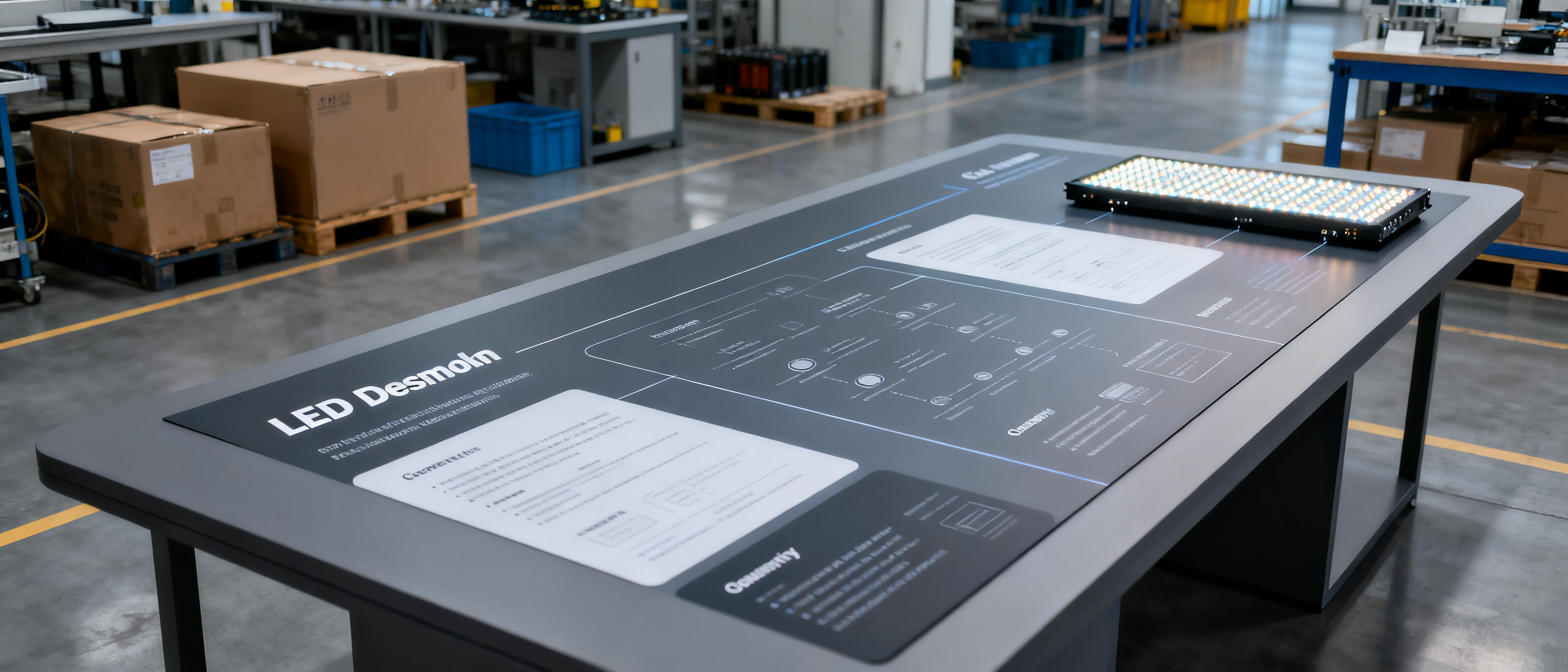
Why the First 10 Seconds Matter on an LED OEM Supplier Site
Overseas buyers scan a factory website in under 10 seconds before deciding to stay or leave. For an LED manufacturer, that fleeting window determines whether a procurement manager sees a capable partner or a risky unknown. Building led oem supplier website trust for manufacturers isn’t about flashy design—it’s about instantly communicating legitimacy, production capability, and reliability. Google’s own Search Essentials emphasize that high‑quality pages must demonstrate expertise and trustworthiness. If your site’s first impression fails to answer “Are they a real factory?” and “Can they handle my order?,” you lose the lead before the page finishes loading.
A generic template with stock photos and vague text triggers skepticism. The B2B Frontage demo skin solves this by front‑loading trust signals that mirror how professional buyers evaluate suppliers. The architecture—not the exact copy—is what earns that 10‑second scan. By understanding the structural logic behind the LED demo skin, you can adopt the same trust framework for your own factory without cloning the template.
Above‑the‑Fold Trust Signals from the Demo Skin
The LED factory demo places five decisive elements in the hero area. These aren’t decorative; each one answers a specific buyer doubt. The table below breaks down how the demo skin’s above‑the‑fold layout builds led oem supplier website trust for manufacturers within seconds.
| Trust Signal | What It Communicates | Demo Skin Placement |
|---|---|---|
| Authentic factory photo | Real production environment, not a virtual office | Full‑width background image |
| Certification badges (ISO, CE, RoHS) | Compliance with international quality and safety standards | Top‑right badge cluster |
| Bullet‑point core capabilities | Product range, MOQ, lead time, custom OEM/ODM | Left‑aligned overlay text |
| Prominent inquiry CTA | Low‑friction path to start a conversation | Contrasting button above the fold |
| Short company tagline | Niche focus (e.g., “Commercial LED Lighting OEM Since 2009”) | Headline text |
No visitor needs to scroll to confirm the factory is legitimate. The demo skin’s information architecture treats the hero section as a rapid‑fire credential check. When you adapt this structure for your own LED business, you swap in your real factory image, your actual certifications, and your unique capabilities—the trust framework stays identical.
How the Demo Skin’s Content Hierarchy Preempts Buyer Objections
After the hero section, the demo skin follows a deliberate sequence that mirrors the typical procurement evaluation. Each content block neutralizes a common objection before the buyer even forms it. This hierarchy is the real trust builder, not the specific wording.
- “Can they make my product?” — A detailed capabilities section with product categories, technical specs, and OEM/ODM workflows appears immediately after the hero. The LED demo lists indoor, outdoor, and industrial lighting with key parameters.
- “Do they have experience?” — A timeline or “About Us” block shows years in business, factory size, and major equipment. The demo skin places this right after capabilities, reinforcing stability.
- “Are they reliable?” — A quality‑control section with testing photos and process descriptions follows. The LED demo includes in‑house lab images and QC checkpoints.
- “Who else trusts them?” — A client logo strip or brief case studies (without sensitive names) demonstrates market acceptance. The demo skin uses a clean logo grid.
- “What are the next steps?” — A simplified inquiry form sits near the bottom, often with a direct email or WhatsApp link. The demo skin keeps fields minimal: name, email, message.
This sequencing isn’t accidental. It aligns with how B2B buyers scan: credentials first, then proof, then action. By adopting the same content hierarchy, your LED factory site can preempt objections without needing to copy the demo’s text or images. The B2B Frontage demo skin proves that structure alone can carry the trust load.
Adapting the Demo Skin’s Inquiry Path for Your Own LED Factory
You don’t need a developer to replicate the demo skin’s trust architecture. The inquiry flow—from first glance to form submission—can be mapped onto your existing content or a new B2B Frontage site. Follow these steps to make the structural logic your own.
- Audit your unique trust assets. List every certification, factory photo, equipment specification, and client success story you can legally share. These will fill the demo skin’s predefined slots.
- Prioritize above‑the‑fold elements. Place your strongest asset—usually a wide‑angle factory shot with visible production lines—as the hero background. Add certification badges and a one‑line value proposition.
- Sequence your inner pages like the demo. Even a single‑page site should follow the capabilities → about → quality → clients → contact flow. The LED demo uses anchor links to create that journey on one page.
- Keep the inquiry form short. The demo skin asks only for name, email, and a message. Resist the urge to demand phone numbers or company details upfront—that kills trust.
- Integrate your digital card and brochure. With B2B Frontage’s Auto plan at $59/year, you get a self‑serve English showcase that includes a digital business card, downloadable brochure, and short links—all reinforcing the same trust architecture. A free subdomain is included; you can bind your own domain for $5 or register+bind for $15 at checkout.
For manufacturers who need a larger catalog or custom features, B2B Frontage provides full factory websites by quote. But the Auto plan’s architecture already embeds the same trust logic as the demo skin, making it a fast, affordable way to launch a buyer‑ready LED OEM site. Review the site rules and pricing before you start.
FAQ
Can I just copy the LED demo skin’s design exactly?
Cloning the demo skin’s exact layout and content risks duplicate content issues and fails to communicate what makes your factory unique. The trust architecture—the sequence of credibility signals and the inquiry flow—is what buyers respond to. Use the demo as a structural blueprint, then fill it with your own factory photos, certifications, and product details.
How quickly can I get a site with this trust architecture?
With B2B Frontage’s Auto plan at $59/year, you can publish an English showcase site in minutes. The system is pre‑built with the demo skin’s structure; you simply replace placeholder content with your own. No coding or design work is required.
Do I need a custom domain for trust?
A custom domain (e.g., yourfactory.com) adds credibility, but the demo skin’s trust architecture works even on a free subdomain. B2B Frontage lets you bind your existing domain for a $5 fee at checkout, or register a new one and bind it for $15.
What if I need more than a showcase site?
For extensive product catalogs, multi‑language support, or custom inquiry workflows, B2B Frontage offers larger factory websites by quote. The same trust principles scale—the architecture remains the foundation.
References & Further Reading
- B2B Frontage Demo Skin — Live example of the trust architecture in action
- LED Factory Demo Skin — Industry‑specific implementation for LED OEM suppliers
- B2B Frontage Site Rules & Pricing — Current plans, domain options, and content guidelines
- B2B Frontage Blog — More articles on factory website trust and buyer psychology
- Google Search Essentials — Official guidance on E‑E‑A‑T and page quality
- Why speed matters — web.dev’s breakdown of how load time affects user trust