2026-07-29
LED Factory Sites: The Hero Slider Is a 10-Second Trust Killer
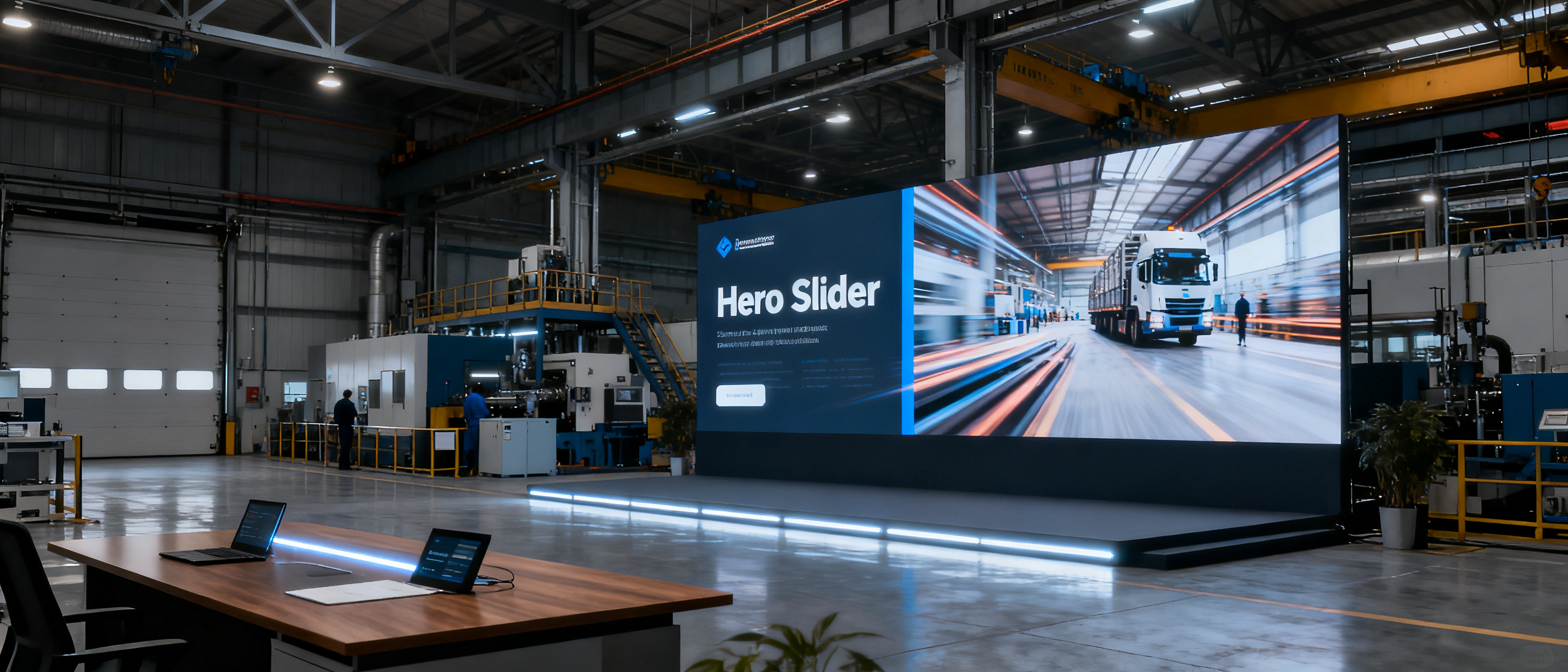
The 10-Second LED Factory Site Window
Overseas buyers scanning for an LED factory partner rarely give a site more than a few seconds. The typical pattern—open a dozen search results, skim the top of each page, and close the tab if nothing signals immediate credibility—is brutal. In those first 10 seconds, a rotating hero slider does more damage than good. Instead of presenting a single, stable message that confirms “we are a real factory,” it forces the visitor to wait for a second or third slide, introducing motion, ambiguity, and often a missed opportunity to see the one thing that would have kept them on the page.
A few clear trust signals make the difference between a quick bounce and an inquiry. A factory name, a recognizable LED product image, a visible certification logo, and a direct path to contact—these are what a buyer’s eyes hunt for. When a hero slider erases that clarity, the site feels like a generic template, not a production partner. B2B Frontage builds LED factory showcase sites with this 10-second rule in mind: no sliders, no carousels, just a deliberate, static above-the-fold that answers the buyer’s first question before they scroll. Take a look at the LED factory demo to see how a single, clean hero area communicates “we manufacture LEDs” without the distraction.
How Hero Sliders Slow Down Credibility
A hero slider burdens a factory site with multiple credibility problems that compound in the critical scanning window. They aren’t merely a design preference—they introduce measurable trust-killing friction.
- Heavier page loads and layout shifts. Sliders often pull in large image files and JavaScript that delay the Largest Contentful Paint (LCP). Google’s Core Web Vitals make it clear that a slow LCP hurts perceived performance and search visibility. A buyer on a mobile device with an unstable connection will see a blank space or a loading spinner, not a factory image.
- Banner blindness and message dilution. Buyers have learned to ignore rotating banners. If the first slide says “High-Quality LED Strips” and the second promotes “LED Panel Lights,” the visitor absorbs neither. The single most important message—why this factory is trustworthy—gets diluted across multiple under-optimized slides.
- User control is taken away. Auto-rotating slides move at a pace the factory chose, not the buyer. A fast reader may miss the key certification slide; a slow reader may feel rushed. Pausing or tapping a slide is extra work that many won’t bother with.
- Accessibility and readability issues. Text overlaid on ever-changing background images often fails contrast checks, and motion can trigger discomfort for users with vestibular disorders. A factory that ignores these basics signals a lack of attention to detail—exactly the opposite of what a quality-conscious buyer wants to see.
When a buyer’s first impression is a battle with a carousel, credibility isn’t built; it’s leaked. The site looks like every other unverified trading company rather than a factory confident enough to hold a single, strong message.
What a Trustworthy Above-the-Fold Looks Like Instead
A trustworthy above-the-fold for an LED factory site is static, fast, and ruthlessly focused. It doesn’t beg for attention with motion; it earns it with clarity. The core elements usually include a single factory-or-product image (no rotation), the company name and a short value line, a visible certification mark or association logo, and a contact method that is immediately tappable.
B2B Frontage’s LED factory demo at demo.getb2bsite.com/led follows this exact blueprint. The hero area is a single image of an LED strip production line under a clear headline, with a fixed CTA button and a phone number sitting in the header. No slides, no fade-ins, no guesswork. The static design signals stability and authenticity—qualities that overseas buyers associate with a real manufacturer, not a middleman. The B2B Frontage rules explain why we avoid sliders altogether: a thin, fast, single-page showcase with no moving parts mirrors the way a factory would present itself in a face-to-face meeting.
The tiered approach lets factories choose the level of control they need. The Auto plan ($59/year) delivers exactly this kind of static, slider-free site, frozen after launch so it remains predictable and maintenance-free. For factories that want to update product listings and publish blog content, a custom CMS site is available by quote—still without introducing a slider. The hero area stays clean, and the inquiry path remains direct.
| Aspect | Hero Slider Site | Trust-Building Static Site |
|---|---|---|
| User attention | Split across multiple slides; banner blindness | Focused on a single factory message |
| Trust signal | Looks generic, often template-like | Feels deliberate, stable, and authentic |
| Load speed | Heavier; risks poor LCP and CLS | Light, fast, meets Core Web Vitals |
| Mobile experience | Text hard to read, controls tiny | Clean, readable, tappable CTAs |
Shortening the Inquire Path with No-Friction Design
A hero slider doesn’t just hurt trust—it physically lengthens the path to an inquiry. A buyer who must wait for a slide to finish, or hunt for a contact button hidden under a carousel dot, is a buyer who will leave. No-friction design means the inquiry steps are visible and immediate the instant the page loads.
Here’s how a factory site can shorten that path:
- Replace the slider with a single static hero image and a prominent CTA button. The button can say “Inquire Now,” “Request a Quote,” or “Chat on WhatsApp”—and it sits directly on the hero, visible without scrolling.
- Place essential contact info in the header. A phone number, email, or WeChat ID that stays fixed as the user scrolls removes all guesswork.
- Make the first form easy and short. A name, email, and a single message field right below the hero (or as a modal triggered by the CTA) is far more inviting than a multi-field form buried on a separate page.
- Use trust badges near the inquiry point. A small ISO logo, CE mark, or a “Verified Factory” badge next to the CTA reinforces the decision to reach out.
On the B2B Frontage demo site, the inquiry phone number and WhatsApp link sit in the top bar; the “Inquire Now” button leads to a simple form. Nothing rotates, nothing slides, and the buyer never has to search. For factories that need to update product details frequently, a custom CMS plan (available by quote) keeps this no-friction structure while allowing CMS edits to product pages. Layout changes beyond the standard template are handled as billable hours, so the core inquiry path remains untouched and perpetually fast.
FAQ
Do hero sliders hurt LED factory site SEO?
Yes, indirectly. A slider adds page weight and often causes layout shifts and slower loading, which Google’s Core Web Vitals measure. Poor vitals can lower a page’s ranking, especially on mobile. Additionally, multiple slides dilute the main keyword focus of the page, making it harder for search engines to understand what the factory does. A static, single-message hero area helps both users and crawlers.
What’s the best above-the-fold for a small LED factory with a limited budget?
A single, high-quality photo of your main product or production line, your factory name, a short value statement, and a visible contact button. You don’t need a carousel or a video. The B2B Frontage Auto plan ($59/year) provides exactly this—a static, slider-free site that loads fast and doesn’t require any ongoing maintenance. The site is frozen after launch, so you never worry about broken sliders or outdated plugins.
Can I keep my hero slider and still have a fast site?
It’s technically possible to optimize a slider for speed, but the real problem isn’t just performance—it’s the credibility cost. Even a fast slider still dilutes your message and triggers banner blindness. Most buyers on a factory site would rather see one clear image with a direct inquiry path than a rotating set of promotions. The trade-off is rarely worth it for a factory that wants to build trust quickly.
References & Further Reading
- B2B Frontage Demo Site – A live example of a slider-free factory showcase.
- LED Factory Showcase Demo – How a static hero area works for an LED manufacturer.
- B2B Frontage Rules – Why sliders, complex animations, and heavy templates are avoided.
- B2B Frontage Blog – More thin‑site strategy insights for factory owners.
- Google Core Web Vitals – How page experience signals affect trust and ranking.