2026-08-03
Why Your Export Factory Website Inquiry Path Fails the 10-Second Scan (and How to Fix It)
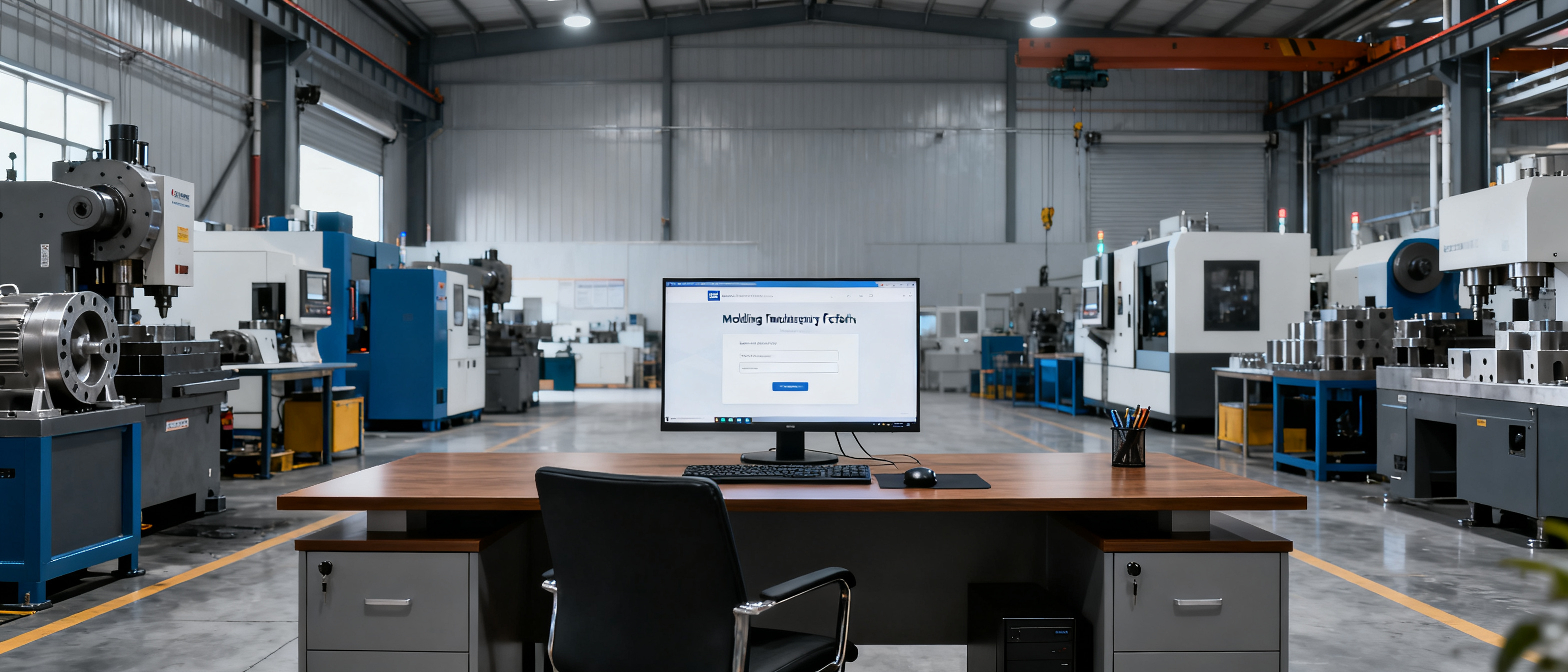
The 10-Second Scan That Determines Inquiry Fate
An export factory website inquiry path that fails the 10-second scan costs molding factories more lost leads than any pricing gap ever could. Overseas buyers arrive on a factory site with a single intent: verify credibility fast enough to justify spending time on an inquiry. They are not browsing. They are eliminating. Within 10 seconds, a procurement manager or sourcing agent makes a binary decision—trust this supplier enough to click deeper, or close the tab and move to the next factory on the shortlist. Most molding factory sites lose that scan before the hero image finishes loading. The inquiry path is not merely a contact form at the end of a product page. It is the entire sequence of micro-decisions a buyer makes from landing URL to submission confirmation. Every element along that path either reinforces trust or introduces friction. When the path breaks, the factory never hears about it. The buyer simply vanishes.
What makes the 10-second window so unforgiving for export factories is the asymmetry of information. Buyers evaluating a molding partner are calculating risk against incomplete data. They need immediate visual and structural cues that the factory is legitimate, organized, and capable of handling international orders. If the inquiry path buries those cues behind slow pages, vague navigation, or forms that ask for too much too soon, the site fails the scan. The factory remains invisible—not because its capabilities are weak, but because its digital storefront never cleared the first hurdle of buyer skepticism.
Where Most Molding Factory Inquiry Paths Break Down
Molding factory websites share a predictable set of structural failures that sabotage the inquiry path within the critical 10-second window. The first and most common break occurs at the landing page itself. A hero section dominated by a generic factory exterior photo, a vague tagline like "Quality First, Customer Supreme," and no visible path to product categories or inquiry options wastes the entire scan. The buyer cannot answer the three questions they are silently asking: What exactly do you mold? Can you handle my volume and material specs? How do I reach a decision-maker? When those answers are not immediately visible above the fold, the inquiry path is already broken before a single click happens.
The second common breakpoint is the product-to-inquiry transition. A buyer who has found a relevant molding category—say, automotive connector molds or medical device housings—clicks through expecting a clear next step. Instead, they encounter a dead end: a product gallery with no inquiry button, a contact page buried three clicks away in the footer, or a generic "Send Message" form that asks for 14 fields including company registration number and annual purchasing volume. At this exact moment, the buyer's trust calculation flips. The site stops feeling like a capable supplier and starts feeling like either a data-harvesting trap or an unmaintained digital brochure. The inquiry path must be a continuous, obvious thread from the moment relevance is established to the moment submission is complete.
A third structural break—less visible but equally damaging—is the post-submission void. Even when a buyer completes an inquiry form, many molding factory sites serve a bland "Thank you for your message" page with no confirmation email timing, no reference number, and no indication of what happens next. This silence erodes the trust the inquiry path just built. The buyer is left wondering if the form worked at all, and that uncertainty often triggers a duplicate submission to a competitor. An inquiry path that does not close the loop with a clear, branded confirmation and a realistic response timeline has not truly converted the lead—it has only collected an entry in a database.
Building a High-Trust Inquiry Path: From Landing to Lead
Rebuilding a molding factory's inquiry path requires treating every page element between the landing URL and the submission confirmation as a deliberate trust signal. The path must answer buyer questions before they are consciously formed, remove friction at every transition, and demonstrate organizational competence through design and speed alone. A high-trust inquiry path does not rely on aggressive sales language or exaggerated claims. It relies on structure, clarity, and respect for the buyer's time.
The following elements form the backbone of a trust-first inquiry path for export molding factories:
- Above-the-fold specificity. Within 3 seconds of landing, the buyer must see exactly what the factory molds, for which industries, and a single visible inquiry entry point. Generic hero sections are replaced with category-specific landing pages that name materials, processes, and part types directly. A button labeled "Inquire About Molding" or "Request a Quote for [Category]" outperforms "Contact Us" every time.
- Progressive disclosure on forms. The initial inquiry form asks for only the essential fields: name, company, email, and a single message or specification field. Additional details—volume, material preferences, drawing uploads—are requested on a second optional step or after the initial human response. This respects the buyer's scanning mindset and increases form completion rates significantly.
- Visible trust anchors. Certifications, shipping regions, and sample policy information appear adjacent to the inquiry form, not buried in a separate "About Us" page. A buyer who sees ISO 9001 or IATF 16949 near the submit button is measurably more likely to complete the inquiry.
- Branded confirmation with a timeline. The post-submission page states when the buyer can expect a response (e.g., "We reply within 12 business hours"), displays a reference number, and offers a direct email fallback. This single improvement closes the trust loop that most factory inquiry paths leave open.
For a concrete example of how these principles translate into a live site, the molding factory demo at B2B Frontage illustrates a complete inquiry path built for the 10-second scan. The landing page immediately surfaces injection molding capabilities, material options, and an inquiry entry point—all above the fold. The inquiry form follows progressive disclosure, and the confirmation page reinforces the factory's responsiveness. The entire path is designed to move a skeptical buyer from arrival to submission without a single moment of hesitation over where to click next.
Inquiry Path Speed: The Silent Conversion Killer
Even a perfectly structured inquiry path fails if it loads too slowly. Buyers evaluating export factories are often operating across time zones on inconsistent internet connections. A molding factory site that takes 4 seconds to become interactive on a mobile device in Mexico City or Dhaka has already lost the scan. Page speed is not a technical vanity metric—it is a direct determinant of inquiry path conversion. Google's own research confirms that as page load time increases from 1 to 3 seconds, the probability of a visitor bouncing increases by 32%. For export factory websites, where every visitor represents a high-value potential lead, that probability translates directly into lost revenue.
Speed optimization for an inquiry path must prioritize the critical rendering path from landing to form interaction. The following benchmarks illustrate the performance thresholds that keep a molding factory inquiry path viable across global buyer locations:
| Metric | Target Threshold | Impact on Inquiry Path |
|---|---|---|
| Largest Contentful Paint (LCP) | ≤ 2.5 seconds | Hero image and inquiry button become visible within the 10-second scan window |
| First Input Delay (FID) | ≤ 100 milliseconds | Inquiry form fields respond instantly on mobile devices |
| Cumulative Layout Shift (CLS) | ≤ 0.1 | Buyer does not mis-click due to shifting page elements during load |
| Time to Interactive (TTI) | ≤ 3.8 seconds | Form submission logic is ready before the buyer finishes filling fields |
These thresholds are not aspirational. They are the minimum required for an inquiry path to function under real-world conditions. A factory site built on a bloated WordPress theme with unoptimized images and render-blocking scripts will consistently miss every one of these targets. The result is an inquiry path that looks functional in testing but fails silently in production—exactly the scenario that leaves factory owners wondering why their site traffic never converts into leads.
B2B Frontage addresses this by building export factory sites on a lightweight, static-first architecture that achieves near-instant load times globally. The demo site loads its inquiry path in under 1.5 seconds on standard 4G connections, meeting every Core Web Vital threshold with room to spare. For molding factories specifically, the molding demo demonstrates how category pages, inquiry forms, and confirmation flows stay fast even when buyers access the site from regions with slower infrastructure. Speed is not a feature layered on top of the inquiry path—it is the foundation that makes the entire path usable.
FAQ
What is the most common reason a molding factory inquiry path fails?
The most common failure is a missing or unclear inquiry entry point on the product or category page. Buyers land on a relevant molding category, determine within seconds that the factory can likely meet their needs, and then cannot find a direct way to inquire. A contact link buried in the footer or a multi-step navigation to a generic contact page forces the buyer to hunt for the next step. In the 10-second scan, any friction that requires hunting is fatal. The fix is placing a visible, context-specific inquiry button directly within the content area of every product and category page.
How can I improve my inquiry form without a full website rebuild?
Start by reducing the number of required fields to four: name, company, email, and message. Remove any mandatory fields for phone number, annual volume, or detailed specifications on the first submission. Then add a brief sentence above the form that sets expectations—for example, "We typically respond within one business day." These two changes require minimal development effort and immediately reduce the psychological barrier to submission. If your current platform allows, move the inquiry form higher on the page so it is visible without scrolling on mobile devices.
Does page speed really affect inquiry conversions for B2B factory sites?
Yes, and the impact is measurable. B2B buyers evaluating export factories exhibit the same abandonment behavior as B2C consumers when pages load slowly. A 2-second delay in page interactivity can reduce inquiry form completions by 15-20% on factory sites. The effect is amplified for buyers accessing the site from regions with slower mobile networks, which is common for export-oriented molding factories serving markets in Southeast Asia, Africa, and Latin America. Speed is not a luxury—it is a prerequisite for the inquiry path to function at all.
What should appear on the confirmation page after a buyer submits an inquiry?
A strong confirmation page includes five elements: a clear thank-you message, a realistic response timeframe (e.g., "within 12 business hours"), a reference or ticket number for the inquiry, a direct email address as a fallback contact method, and a link back to relevant product categories. Avoid leaving the buyer on a blank page with only a generic success message. The confirmation page is the final trust signal in the inquiry path and should reinforce that the submission was received by an organized, responsive team.
References & Further Reading
- B2B Frontage Demo Site — A live example of a factory website built for the 10-second scan, with a complete inquiry path optimized for speed and trust.
- Molding Factory Inquiry Path Demo — Industry-specific demonstration of inquiry path design for injection molding and related processes.
- B2B Frontage Rules & Platform Details — Transparent pricing, platform constraints, and the reasoning behind the lightweight factory site approach.
- B2B Frontage Blog — Additional articles on export factory website strategy, inquiry optimization, and buyer behavior patterns.
- Web Vitals — Core Web Vitals Documentation — Google's technical reference for the performance metrics (LCP, FID, CLS) that directly impact inquiry path usability and search visibility.